

Pigment Yellow 138 in 2026 | 138L vs 138K Buyer Guide
Time:2026-09-02
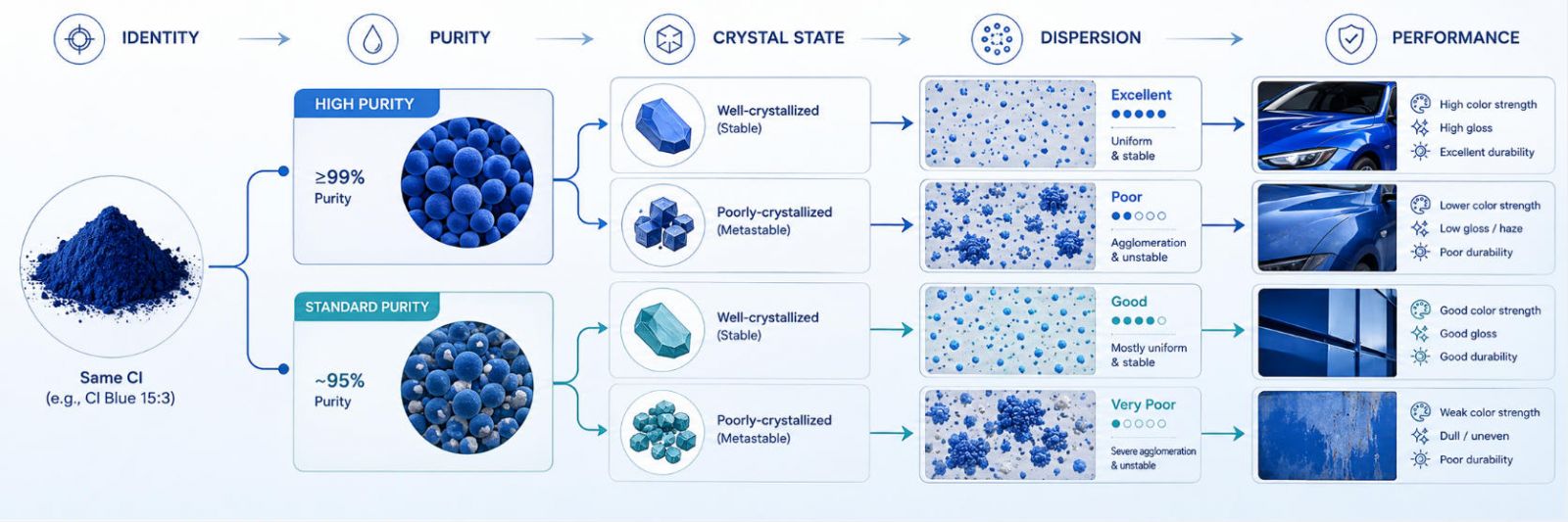
Conclusion first: in 2026, buyers should stop treating “Pigment Yellow 138” as one interchangeable specification. New research shows that purity can change crystallization, particle-size distribution and final performance. For coatings and plastics, the CI number is only the starting point; the qualified grade and its physical behavior determine whether the pigment will work.
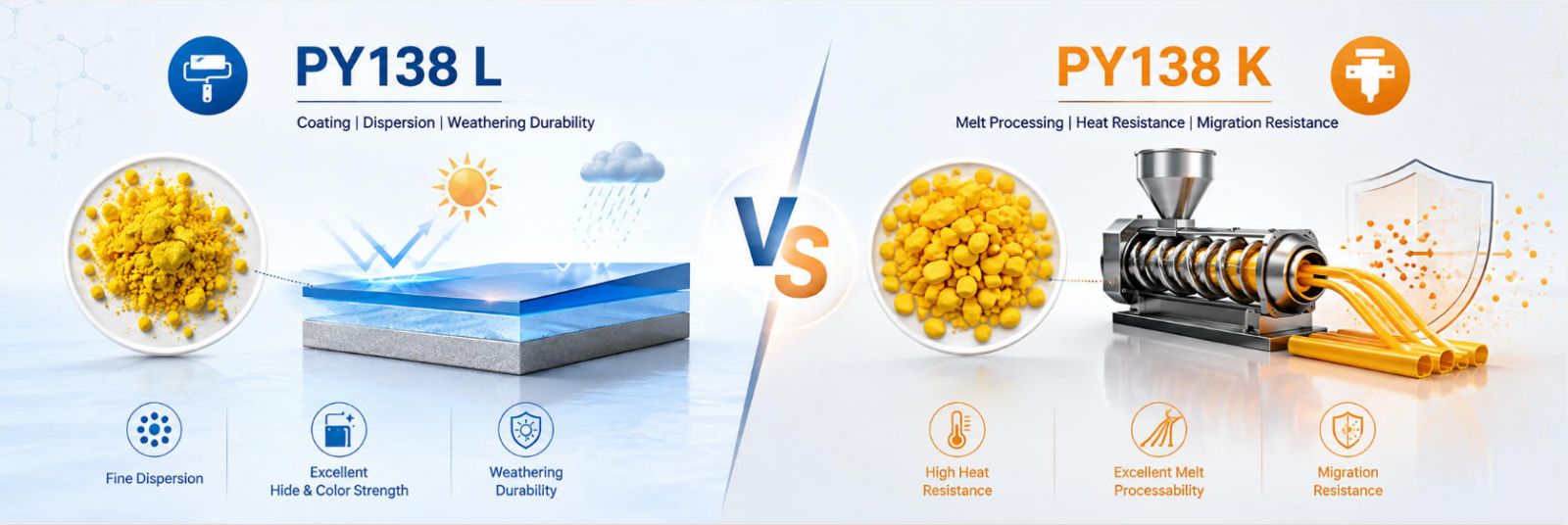
Our Organic Pigment Yellow range shows the point clearly: Pigment Yellow 138 L is positioned for coatings and paint, while Pigment Yellow 138 K is positioned for plastics.
Why PY138 Is Back in the Spotlight
A 2026 Dyes and Pigments study found that higher PY138 purity produced narrower particle-size distribution, higher crystallinity and more uniform morphology. The study focused on color filters, so its numbers should not be transferred directly to coatings or plastics; the useful lesson is that impurity level and crystal growth can change the physical pigment. citeturn834438search0
138L vs 138K: Same CI, Different Qualification Targets
| Item | PY138 L | PY138 K |
|---|---|---|
| CAS | 30125-47-4 | 30125-47-4 |
| Use | Coating & paint | Plastic |
| Heat resistance | 200°C | 280°C |
| Light fastness | 8 | 8 |
| Buyer focus | Dispersion, weathering, viscosity | Heat, migration, processing stability |
Our 138L TDS positions the grade for coatings and paint; the 138K page positions its grade for plastics with 280°C heat resistance. The implication is straightforward: qualify the application grade, not only the Color Index. citeturn124088search1turn263996search5
What Buyers Should Test Beyond the COA
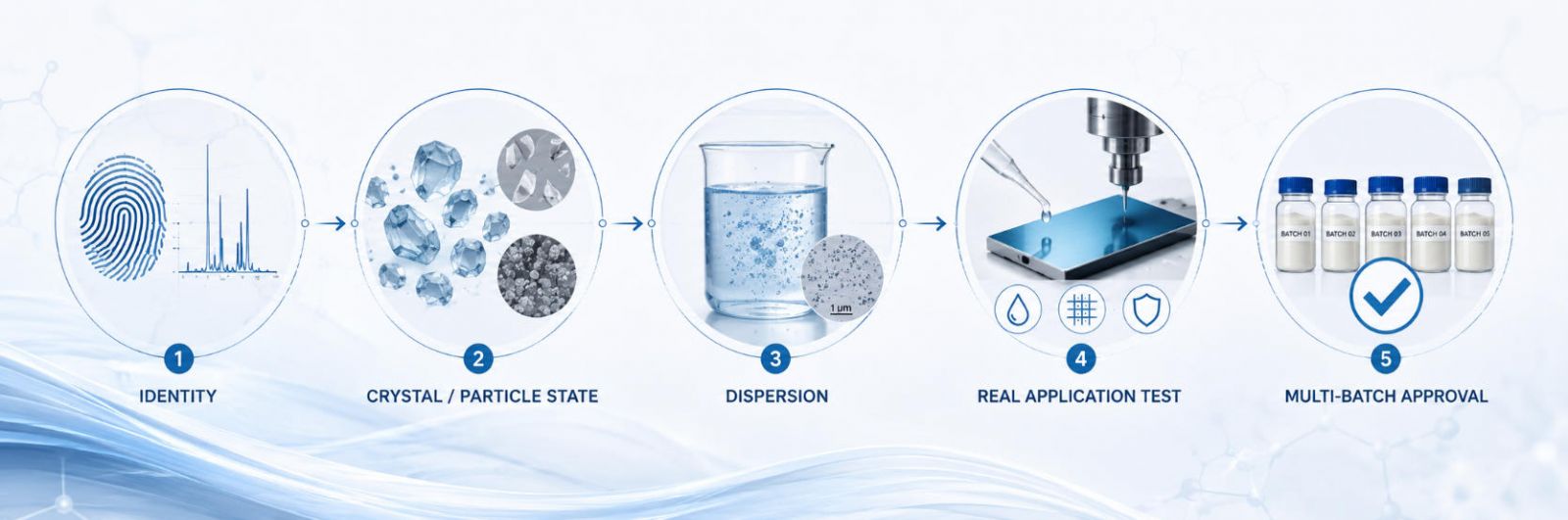
Coatings buyers should compare shade, milling response, viscosity, gloss, weathering and solvent resistance in the actual binder system. Plastics buyers should add heat history, migration, dispersion and shade stability after processing.
In 2026, regulation remains a major pigment-industry issue, and the EU also revised its Ecolabel criteria for paints and varnishes. These changes do not certify any PY138 grade, but they increase the value of documentation, impurity control and repeatability. citeturn834438search6turn834438search7
Why Batch Consistency Matters
A shift in crystal habit or coarse-particle fraction can appear as milling, viscosity, gloss or shade problems. Our application evaluation system therefore covers ink, coating and plastics, not only chemical identity. For plastics, our pigment migration guide explains another failure mode that CI number alone cannot predict.
FAQ
Sources & Verification
Qualify the PY138 Grade, Not Just the CI Number
Send us your resin system, processing temperature, shade target and fastness requirements. We can recommend a relevant PY138 grade and sample-validation path before commercial approval.
Hangzhou Sunglow Chemical Co., Ltd. · sales@sunglowchem.com · www.sunglowchem.com